Revolut broker review 2026 from Spain: fees by plan and safety
//11 min read
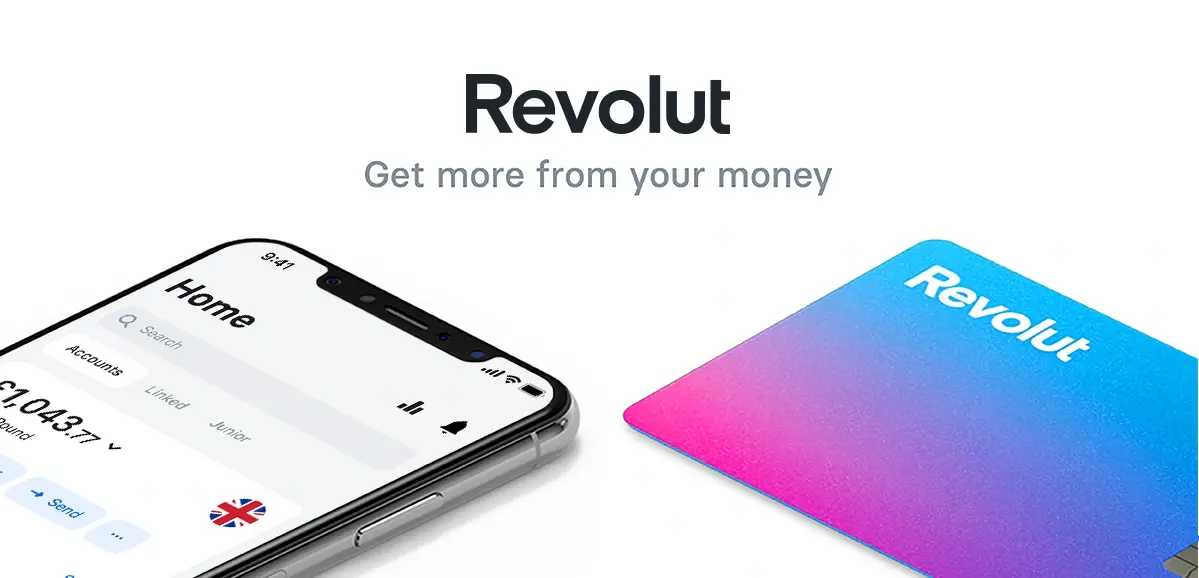
Revolut Trading is not a broker: it is one more feature inside a financial superapp — a Spanish IBAN account, multi-currency balances, money market funds, crypto, gold and stocks all in the same place. That is its greatest strength and also the reason for its limits. After more than 6 years using it, here is what it is genuinely good for and what it is not.
Revolut is the Swiss army knife of personal finance: a day-to-day account, currency exchange, interest-bearing balances via money market funds and, inside the same app, a broker with more than 3,000 US and European stocks, ETFs, commodities and cryptocurrencies.
Its investing proposition is straightforward: minimal fees, fractional shares from EUR 1 and the convenience of moving money between your current account and your investments in two taps. The usual question: can a superapp work as your main broker, or is it the perfect complement to another one?
This review looks at it from the point of view of a long-term investor living in Spain, with an account since Revolut arrived in the country more than six years ago. It is not financial or tax advice; it is a practical guide.
Quick verdict: who Revolut is for
Investor profile
Fit with Revolut
Why
Starting with small amounts
High
Fractions from EUR 1, free trades depending on plan
Already a Revolut banking user
High
Investing without opening another account, all integrated
Revolut provides each service from a different subsidiary, and it pays to know which one is serving you:
Banking: Revolut Bank UAB, Spanish branch, registered with the Bank of Spain (no. 1583). Bank deposits are covered by the deposit guarantee scheme up to EUR 100,000.
Investing: the European securities subsidiary (based in Lithuania), registered to operate in Spain (CNMV, code 5175). Securities are segregated and covered by the Lithuanian compensation scheme (around EUR 22,000).
Cryptocurrencies: regulated under the MiCA framework, but outside any compensation scheme.
Three different levels of protection inside the same app — the classic mental trap is assuming everything carries the banking cover. It does not: shares have their own (smaller) protection and crypto has practically none.
Fee structure: it depends on your plan
Revolut runs on subscription plans, and the broker inherits that logic:
Plan
Free trades/month
After that
Standard (free)
1
0.25% (min. EUR 1)
Plus
3
0.25% (min. EUR 1)
Premium
5
0.25% (min. EUR 1)
Metal
10
0.25% (min. EUR 1)
Ultra / Trading Pro
10+
0.12%
On top of that:
Custody and maintenance: EUR 0.
Currency conversion: at the interbank rate on weekdays within your plan's limit (EUR 1,000/month on Standard); above the limit or at weekends, a markup (~1%). The important nuance: you can hold a dollar balance and buy US stocks without converting on every order.
Crypto: its own fee per trade (~0.5% depending on amount and plan).
For a DCA investor making one purchase a month, the free plan literally costs zero. For heavier activity, run the numbers between upgrading the plan or paying 0.25% — or using Revolut as a satellite only.
Products available
More than 3,000 stocks from the US and Europe, with fractions from EUR 1 and even voting rights at shareholder meetings — something many neobrokers do not offer.
European ETFs for indexing.
Commodities such as gold and silver.
Cryptocurrencies with a broad catalogue.
Money market funds ("Flexible Accounts") to earn interest on cash depending on plan.
What is missing: traditional mutual funds, individual bonds on decent terms, and markets outside the US and Europe. The catalogue covers the generalist; the specialist will notice the gaps.
The multi-currency trick
Here is the least discussed advantage of Revolut as a broker: the real multi-currency account. You can convert euros to dollars at the interbank rate (within your plan's limit, and on weekdays), hold that balance in USD and buy US stocks without paying a currency conversion on every order — and receive dividends in dollars to reinvest without converting back.
Compared with DEGIRO's 0.25% or MyInvestor's 0.30% on every purchase, sale and dividend payment, the difference compounds for an active US portfolio. It is the same argument as Interactive Brokers, in a simplified version for everyday users. The catch: it takes the small discipline of converting on weekdays and within your plan's allowance.
Interest on cash
Uninvested cash can earn interest through money market funds ("Flexible Accounts"), at a rate that depends on currency and subscription plan. As with Trading 212, remember the nuance: it is a money market fund, not a bank deposit — the EUR 100,000 deposit guarantee does not apply to money inside the fund, even if the risk of a euro money market fund is low. Day to day it works as an interest-bearing buffer to fire contributions from when the market offers opportunities.
The small print
Foreign-broker taxation: the investing subsidiary is not Spanish. Your dividends arrive with withholding tax applied and nothing shows up automatically in the pre-filled draft return: you have to declare payments and positions, assess whether Modelo 720 applies given the amounts, and work with reports designed for all of Europe rather than for the Spanish return. The difference against a HeyTrade or MyInvestor is one weekend of paperwork a year. Full guide in dividend taxation.
Investment cover of ~EUR 22,000: well below the EUR 100,000 of Spain's FOGAIN. For large portfolios, that weighs.
No securities transfer: moving your portfolio to another broker means selling and rebuying, with the tax cost that implies. It remains the platform's historic gap.
The free allowance is per plan, not per market: if you contribute to several positions in the same month, the 0.25% shows up quickly on the Standard plan.
Revolut for the dividend investor
Dividends are credited to your account (in the security's currency — useful if you hold a USD balance) with the corresponding withholding tax applied. The good part: zero fee for receiving them and the ability to reinvest instantly thanks to fractions. The bad part: tax tracking is manual and the reports are a step behind the specialists.
My reading: for building the habit — small contributions, reinvestment, learning — it works very well. For an established income portfolio, the combination of reduced compensation cover, paperwork and lack of transfers leaves it as a satellite account. Compare it with Trade Republic or Interactive Brokers in our broker comparison if that is your case.
I have been investing on the platform for more than 6 years, since it arrived in Spain. As a tool it is simple, convenient and cheap — an ideal candidate for small amounts and for keeping investments where your day-to-day money already lives.
The interface is clean and visual, with the essential information; over the years they have added the sector breakdown and the overall portfolio performance view that used to be missing. They keep shipping features the community asks for, and it shows.
It follows Robinhood's school of simplicity: accessible to 99% of people, with superapp ambitions around it. In my case the paid subscriptions do not pay off — the free plan with one trade a month covers the satellite use I give it.
How to open a Revolut account
If you already use Revolut as your bank, enabling the broker takes two minutes inside the app (regulatory questionnaire included). If not, the full sign-up is online with your ID document:
The banking side is registered with the Bank of Spain (no. 1583) with a EUR 100,000 deposit guarantee; the investing side operates under European regulation registered with the CNMV (code 5175), with segregated assets and compensation of ~EUR 22,000. Cryptocurrencies fall outside any compensation scheme.
What does Revolut charge for investing?
Depending on your plan, 1 to 10 free trades per month; after that, 0.25% with a EUR 1 minimum (0.12% on the top plans). No custody fee. Currency conversion is at the interbank rate on weekdays within your plan's limit, with a markup above it and at weekends.
Does Revolut pay the dividends on my shares?
Yes, they are credited to your account in the security's currency, with the corresponding withholding tax (15% in the US once your W-8BEN is processed). Tracking it for the Spanish tax return is on you.
Do I have to declare my Revolut account in Spain?
Yes. As a foreign entity, your positions and income do not appear automatically in the pre-filled draft return, and depending on balances Modelo 720 may apply. The detail is in our dividend tax guide.
Can I transfer my Revolut shares to another broker?
No: as of this review it still does not offer securities transfers, so leaving means selling and rebuying, with the capital gains tax impact that carries. Bear it in mind before building a large position.
Are Revolut shares real or derivatives?
They are real shares (with fractions), and they even allow you to exercise voting rights at shareholder meetings — unlike the derivatives or tokens of other platforms. Not to be confused with its crypto section, which is a different product with a different risk.
What happens to my shares if Revolut fails?
Securities are segregated from the company's own accounts, so in principle they would remain yours; on top of that the Lithuanian compensation scheme covers up to ~EUR 22,000 per investor for fraud or failures in that segregation. It is real protection, but smaller than the EUR 100,000 of FOGAIN at a Spanish broker.
Revolut or Trade Republic to start?
If you already live inside Revolut and will make few trades, Revolut is the path of least friction. If you want automated investment plans and a pure broker focus, Trade Republic. Compare both on our brokers page.
Revolut is the best demonstration that convenience counts too: having banking, currencies and investments in one app reduces the friction of investing to almost zero. As a satellite broker — first contributions, fractions, dollar operations — it is outstanding. As the head office of a serious dividend portfolio, its compensation cover, reports and lack of transfers argue for looking at the specialists. Use it for what it is: the most convenient entry door on the market.
This article is educational content, not financial or tax advice. Fees, plans and rates change often: verify current conditions on the official website. The sign-up link is a referral link: it helps us keep the site free for you (transparency).