Mintos review 2026: from P2P to a multi-product investment platform
//8 min read
Mintos is no longer just the P2P loan marketplace you remember: in 2026 it offers fractional bonds, ETF portfolios, an interest-earning cash product and even real estate, under an investment-firm licence and with a banking-licence application underway. The advertised returns are still juicy — and the risks are still very real. An honest analysis, uncomfortable numbers included.
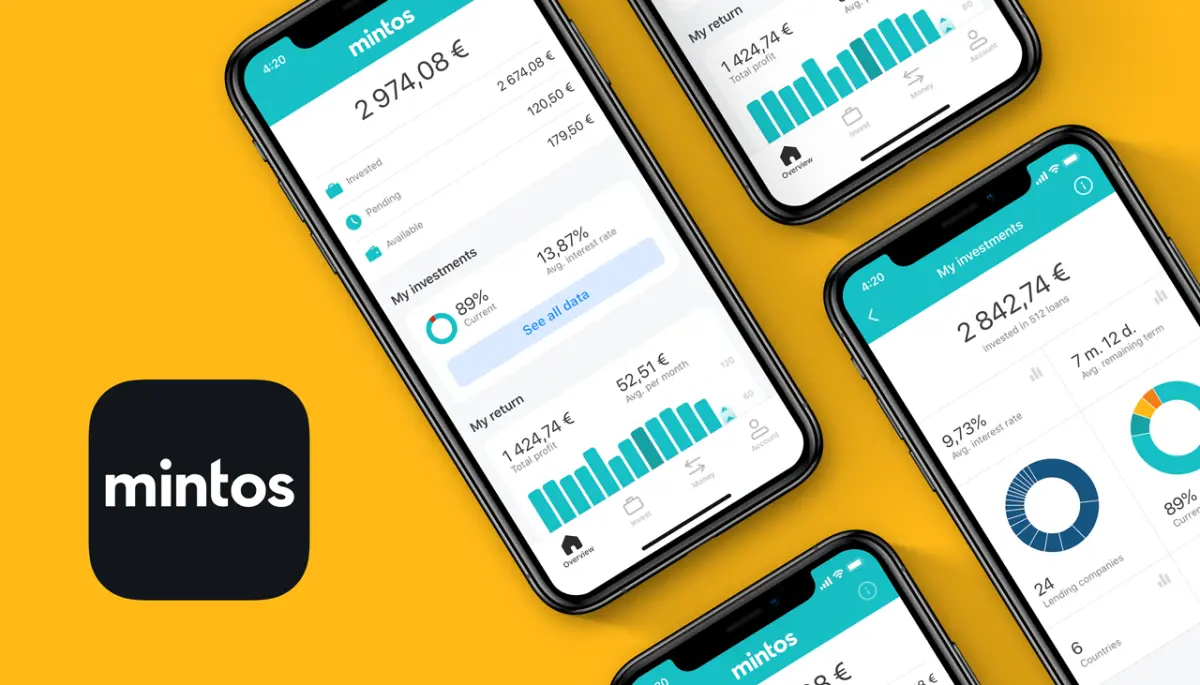
Mintos is Europe's largest loan-investment platform: more than 600,000 registered users and over €800 million under management. Since 2021 it has operated with an investment-firm licence (MiFID II, supervised by the Latvian regulator), which separates it from the unregulated P2P of the last decade — and in February 2026 it took the next step: applying for a banking licence in Latvia, a process of at least two years.
None of that makes its products safe. Let's get to what matters: what it offers, what it really returns, what can go wrong and how it fits (or not) into an income-oriented portfolio.
What Mintos offers in 2026
Product
Minimum
Fee
What it is
Loans (Notes)
€10
0% (Core) / 0.29% per year (Custom)
Fractions of loans from dozens of originators
Fractional bonds
€50
0.39% per year on the High-Yield portfolio from 2026
Sliced corporate bonds
ETF portfolio (Core ETF)
€50
0% added management fee
A diversified index portfolio
Smart Cash
€50
0.19%
Money-market fund (BlackRock) for cash, ~2%
Real estate
€50
Variable
Fractional rental investments
Watch the side fees, which is where the platform has been tightening: €4.90/month inactivity fee, 2% on card deposits and 0.85% on secondary-market trades. The historic flagship — the automated loan portfolio — remains free in its Core version.
How the loans work (and where the risk lives)
You invest in Notes: regulated securities bundling fractions of consumer loans issued by originators from all over the world. The originator promises you an interest rate (the expected range Mintos publishes for diversified portfolios is around 10–12% per year) and a "buyback obligation" if a loan is more than 60 days late.
The key word is obligation, not guarantee: the buyback is worth what the originator signing it is worth. Mintos's recent history proves it with public figures:
During the 2020–2022 crises there were more than €150 million in recovery — investor money trapped in fallen originators.
The Varks case (an Armenian originator): years after the collapse, around €10 million had still not been recovered by 2024.
At some originators, impairments have exceeded 25% of the portfolio.
Most diversified investors have ended up in positive territory, but the message is clear: that 10–12% is not fixed income. It is the premium for taking on the credit risk of consumer-finance companies, some in countries with weak legal frameworks.
Regulation and protection: better than before, not bulletproof
The MiFID II licence brings tangible things: audited accounts, capital requirements, regulated prospectuses and membership of the Latvian investor compensation scheme: up to €20,000 (90% of the net loss) if Mintos failed and your assets were missing. What that scheme does not cover — and this is worth engraving — are loan defaults: it covers the intermediary's insolvency, not the credit risk you choose to take.
Two data points to calibrate the company itself: Mintos has reported losses in recent years (around €2 million, with a €2.2 million capital injection in early 2026) while growing revenue, and its banking-licence application — which if granted would bring €100,000 deposit insurance for cash — confirms the direction: looking more and more like a retail investment bank.
Taxation for residents in Spain
Interest on Notes suffers Latvian withholding at source of 5% for EU residents (by submitting a tax residency certificate; without it, the rate is higher). It is then taxed in your IRPF as investment income — the same savings base as dividends — with the right to deduct what was withheld via double taxation relief. And as a foreign platform, remember the Modelo 720 if your positions exceed the thresholds. The details are in the tax guide.
Does Mintos fit in a dividend portfolio?
As a high-risk income satellite, maybe; as a core, no. The structural differences with a dividend growth portfolio:
The interest does not grow: an 11% loan pays 11% — never more. There is no dividend growth and no capital appreciation: your ceiling is the coupon minus defaults.
The risk is concentrated credit risk: unlisted consumer-finance companies, versus global businesses with decades of track record.
Liquidity is limited: exiting before maturity depends on the secondary market (with its 0.85%).
The practical rule we suggest: if the yield tempts you, size it as you would size any high-risk bet — a percentage of your portfolio you could watch halve without changing your plan. And always compare against the boring alternative: a global distributing ETF yields less on paper, but with real, liquid, growing assets.
The 5 rules if you decide to go in
Satellite money only: a portfolio percentage whose partial loss does not alter your plan. The platform's history says recovery episodes happen.
Diversify by originator and country: the real risk sits with the originator, not the individual loan. Dozens of originators, several countries, none dominant.
Stay on the fee-free version (Core) unless you have a concrete reason: in a risky product, giving away an extra 0.29–0.39% a year does not help.
Submit your tax residency certificate from day one: the difference between 5% and the general Latvian withholding is your money.
Check the "funds in recovery" quarterly: it is the platform's honest thermometer, and Mintos publishes it. If it grows, your exposure should shrink.
Who it is for / who it is not for
Yes: investors who understand credit risk, want to diversify their income sources and use the Core version (no fees) with amounts that do not compromise their plan.
No: anyone looking for "a deposit that yields 11%" (it does not exist), needing guaranteed liquidity, or building their first portfolio — there the order is emergency fund, indexing or dividends, and only then the exotic satellites.
Frequently asked questions
Is Mintos safe?
It is a regulated platform (MiFID II) with protection of up to €20,000 if Mintos itself fails — but that coverage does not reach loan defaults, which are the product's main risk. Safe is not the word; regulated, with measurable risks, yes.
What return can I really expect?
Diversified loan portfolios target 10–12% gross per year, from which you must subtract unrecovered defaults, the 5% withholding and your income tax. Bad years (fallen originators) can eat a meaningful slice — the platform's history includes episodes with millions in recovery.
What is the buyback obligation?
The originator's commitment to repurchase loans more than 60 days late. It works while the originator is solvent: if it collapses (the Varks case), the "buyback" is worth little. It is a mitigation, not a guarantee.
How is Mintos taxed in Spain?
Interest carries Latvian withholding (5% for EU residents with a certificate) and is taxed as investment income in your savings base, deducting what was withheld. If you exceed the foreign-asset thresholds, the Modelo 720 applies.
Mintos or a dividend portfolio?
Different things: Mintos offers a high coupon with no growth and credit risk; growing dividends offer a lower starting yield with real assets that appreciate and payments that rise. At most, the former complements the latter — never the other way around.
What about uninvested cash?
You can park it in Smart Cash (a BlackRock money-market fund, ~2%, 0.19% fee) instead of the unremunerated account. And watch the inactivity fee (€4.90/month) if you leave the account idle.
Mintos has done its regulatory homework and become something more serious than the wild P2P of 2019 — the licence, the new products and the banking application confirm it. What has not changed is the nature of its flagship product: high-risk consumer credit with returns to match. Use it for what it is — a speculative income satellite — and let the core of your wealth stay boring.
This article is educational content, not financial or tax advice. Data verified in June 2026; terms and fees change — check the current ones on the official website before investing.