5 Tricks to Optimize Your Returns on Interactive Brokers
//6 min read
Interactive Brokers (IBKR) is the most comprehensive platform available, but that flexibility comes with complexity. In this article, we present 5 essential tips to help you maximize your performance on this broker.
One of the most common complaints when researching Interactive Brokers is its interface and steep learning curve. However, the process can be much simpler than you think if you know where—and how—to look.
🖥️ Choosing the Right Platform
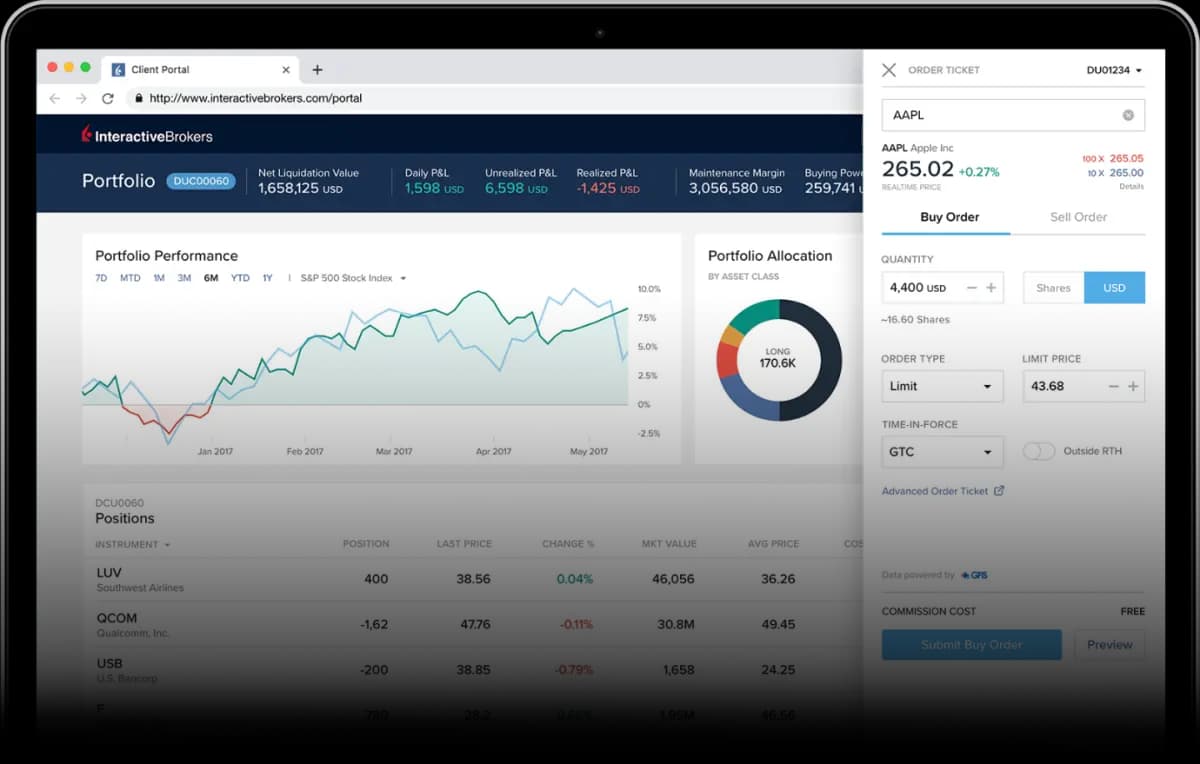
Interactive Brokers is a multi-platform service. You can use the web version, the mobile app, the classic local interface (Trader Workstation or TWS), or even an API to automate your own trading programs.
TWS is the standard version for professional traders, but don't worry—you don't need to master it!
Forget about endless tutorials on how to configure your interface or trying to decipher a thousand flashing numbers and colored charts. This isn't a casino; investing doesn't have to be "exciting," and sensory overload can actually work against you.
For most, the
Web Portal
covers all your needs, and the
Mobile App
allows you to track your positions on the go. If you are a long-term investor, just
Buy & Hold (& Live your Life).
The web and mobile platforms are more than enough; you just need to be clear on a few sections:
⭐ Portfolio Tab: Details of your positions and performance.
⭐ PortfolioAnalyst: Tracks returns, position weighting (concentration, including "look-through" logic for ETFs and Funds), and high-detail performance reports.
⭐Reports Tab: Here you will find full activity statements (Dividends, Trades, and Fees), custom queries, and tax reports.
⭐ Trade Tab: To view your operations and open orders.
⭐ Transfer & Pay: For depositing/withdrawing funds and position transfers.
⭐ Search Bar: Your gateway to research or trade any asset class.
💶 Configure Your Fee Structure
This is a crucial point for your daily costs. It is vital to check which commission plan you have active.
Trading Commissions:
US Stocks: $1 (Fixed) or from $0.35 (Tiered).
European Stocks: €3 (Fixed) or from €1.25 (Tiered).
Generally, for most retail investors, the Tiered structure is more beneficial as it guarantees a lower and highly competitive minimum. Check your settings, as accounts often default to Fixed commissions.
Don't forget to review other account configurations:
Base Currency: The primary currency of your account.
Pricing Plan: Usually IBKR Pro (IBKR Lite is mostly for US residents).
Retail Client Category: Under the European MiFID II directive, this category prevents us from investing directly in US-domiciled ETFs (though it is possible to gain exposure by exercising a Call option in the options market).
Contact Person: A designated individual to be reached in case of any eventuality or emergency.
Financial Information: This data determines your eligibility for various trading permissions, granting you access to a broader or more restricted range of financial products.
W-8BEN Form: Ensure this is filled out during registration to reduce US withholding tax on dividends from 30% to 15%.
🔥 Currency Strategy: To Margin or Not to Margin?
This trick is nuanced, so I urge caution. Misusing margin can lead to the forced liquidation of your account at rock-bottom prices—something we definitely want to avoid.
Margin is simply debt to the broker in the form of a negative currency balance offered at a low interest rate (approx. 1.5–1.6% annually). Your portfolio acts as collateral.
The advantage here is using this credit line to defer currency conversion costs ($2 per trade), which can be a drag on small operations. Instead of converting currency for every small buy, you can buy $3,000 worth of stock at once (paying the fee only once) and gradually cover the Euro balance over the following months with new deposits or dividends.
This allows us to enter US positions while reducing commissions in exchange for a small monthly interest charge, which we can eventually offset with future contributions or Euro-denominated dividends from ETFs or other holdings.
Another application is using margin to snap up dividend stocks when they are trading at attractive prices—allowing you to pay down the debt progressively over time, much like during the 2020 crash.
In any case, you must pay close attention to how much is being lent, the specific margin requirements, and the overall volatility of your positions. Excessive leverage is a "peculiar" problem that you definitely want to avoid.
💸 Generate Passive Income with Your Shares
Interactive Brokers offers a very interesting feature: the ability to temporarily lend your shares to third parties who want to short them.
Most brokers do this behind your back and keep the profit. At IBKR, if you join the Stock Yield Enhancement Program, you receive 50% of the interest generated from the loan.
It is a convenient way to earn passive income with the security of cash collateral—equivalent to the value of your shares—while they are on loan. As I mentioned, most other brokers do this anyway, but you receive nothing in return.
You can track these movements in your Activity Statement, where you will find the details of all lending transactions that occurred during the month and the interest they generated.
It is a comfortable way to earn passive income with the security of cash collateral. You can track these movements in your Activity Report. The interest rate varies based on demand; while a stable ETF might only yield 1–2% annually, a highly demanded stock (like $HOOD in its prime) can yield much more.
🔎 IBKR as a Research Powerhouse
You don't need third-party tools to research a company. The platform includes a massive amount of data and a powerful search engine.
In the Research tab, you can access:
Fundamentals & Stats: Analyst forecasts, ownership evolution, and financial ratios.
ETFs & Funds: Detailed breakdowns of management fees, underlying holdings, and expert ratings.
🌟 Extra: Security First
Security is paramount. Use IB Key (Two-Factor Authentication via the app) and consider restricting access by IP Address—though only do this if you have a Static IP to avoid locking yourself out.